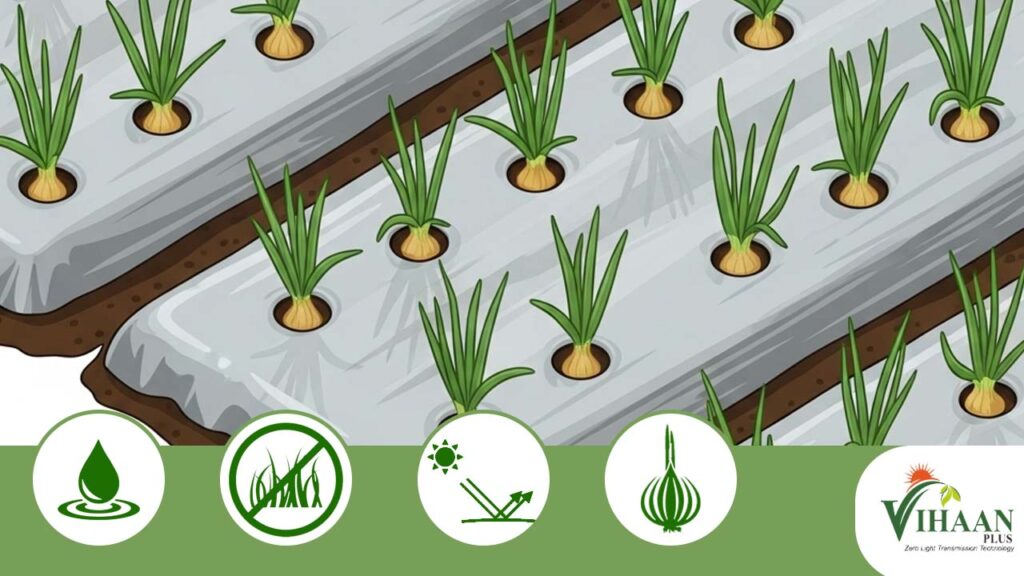
Onion is a shallow-rooted crop that faces major challenges like weed infestation, soil moisture fluctuation, and pests such as thrips. One effective modern solution is plastic mulching, which not only conserves resources but also improves yield and quality.
Benefits of Plastic Mulching in Onion
Moisture Conservation
Onion requires consistent soil moisture.
Plastic mulch reduces evaporation and saves about 25–30% irrigation water.
Weed Control
Blocks sunlight, reducing weed germination by 80–90%.
Saves labor and reduces weeding costs.
Soil Temperature Regulation
Black mulch: Keeps soil warmer → useful in winter (rabi onion).
Silver/white mulch: Reflects heat → suitable for hot climates or kharif onion.
Pest Management
Silver-colored mulch repels thrips, one of the most damaging onion pests.
Helps lower the risk of diseases like purple blotch, which are aggravated by thrips.
Better Yield and Quality
Produces cleaner, shinier, and more uniform bulbs.
Reduces soil sticking, so less post-harvest cleaning is required.
Method of Application
Land Preparation
Prepare raised beds (about 1–1.2 m wide).
Apply organic manure before laying mulch.
Drip Irrigation Installation
Place drip lines in the center of beds for efficient water use.
Laying Plastic Mulch
Use UV-stabilized plastic sheets (25–30 microns thick).
Stretch tightly over beds and cover edges with soil.
Transplanting Seedlings
Make holes at 10 × 10 cm spacing.
Transplant onion seedlings into these holes.
Crop Management
Use drip irrigation regularly.
Fertilizers can be applied through fertigation.
Precautions
Ensure proper drainage during heavy rains to prevent bulb rot.
Remove and dispose of plastic mulch properly after harvest.
Repeated use may cause microplastic pollution in soil.